
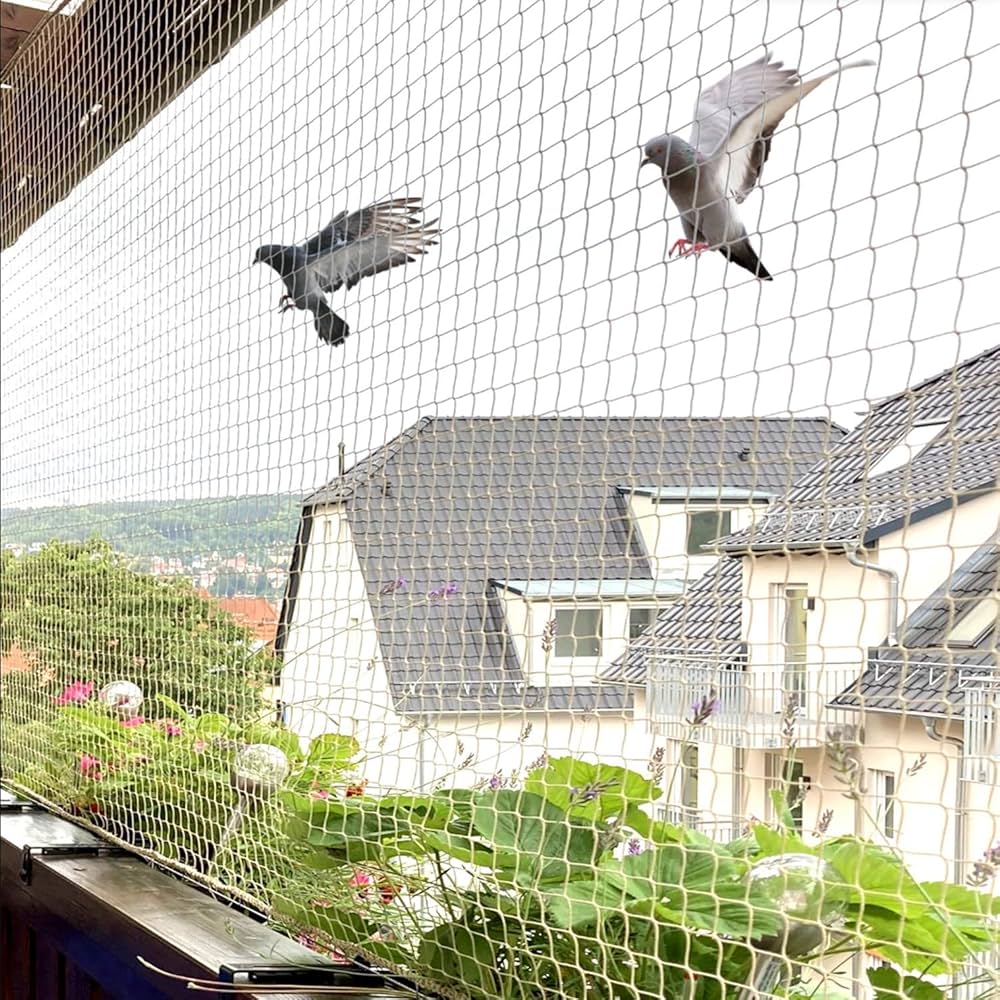
Why Pigeons on Balconies Are a Growing Problem
In today's urban environment, balconies serve as a vital link to nature. Pigeons, however, are making balconies more unpleasant. Balconies are an area where people are creating habitable, recreational spaces. Balconies are a place to relax, enjoy a glass of wine in the evening, do some gardening, or maybe even dry some laundry. Balconies, however, are also home to some less-favourable residents. Pigeon net for balcony have established themselves as an unwelcome resident nuisance to many urban homes. These birds are making a mess of areas intended to be clean. Their mess, which consists of droppings, feathers, and daily debris, creates unacceptable hygiene and maintenance challenges.
From an aesthetic perspective, pigeon droppings also create a visual nuisance, but they also have the potential to create a tangible, financial nuisance. Pigeon droppings are just as aesthetically unpleasant as they are potentially financially damaging. Their droppings can cause deterioration of some building materials, including corrosion of aluminium, staining of tiles, and loss of paint. Also, droppings can harbour poisons (bacteria, viruses, and fungi) that can create serious health problems. This is an even greater concern when the residents include children, the elderly, or domestic animals.
People that want to drive pigeons away from balconies may consider using harmful and inhumane methods. There are better, more humane approaches. Pigeons have the right to be treated ethically. This is why the aim should be to create a situation where pigeons are not harmed but can also be intercepted from nesting and roosting in the (in)appropriate areas. Pigeon netting is a humane, ethical, and practical solution.
What is Balcony Pigeon Netting?
Balcony pigeon netting is a mesh barrier designed to stop birds from accessing open balcony spaces. These nets are made from bird-safe materials such as nylon and polyethylene. They are lightweight, weatherproof, and almost undetectable from a distance. When nets are installed, they shield birds from being able to land or nest.
Nets are simple: if birds cannot access a balcony, they are encouraged to look elsewhere to land. This method is one of the most simple, humane, and environmentally friendly solutions to bird control.
Why install pigeon netting?
One of the biggest advantages of installing pigeon netting is cleanliness. Keeping birds from accessing balconies eliminates the accumulation of bird waste, feathers, and nesting materials. This reduces the cleaning demands and protects the floor, furniture, and railings from bird waste damage.
Improved health and balcony safety net in dubai security is another main advantage. Bird droppings contain pathogens that can cause respiratory infections and other health problems if the droppings are inhaled, touched or otherwise come into contact with people. The installation of a net reduces these risks because the net prevents the birds from coming in the first place.
With pigeon nets, you have a clearer idea of how your home can be. You can leave your windows, as well as your balcony doors, open and enjoy the fresh air without the risk of birds coming and flying into your home. If you have plants on your balcony, the netting will also protect your plants from being trampled by invading pigeons, as well.
Modern pigeon nets are designed to add to the seamless stream of design with the other architectural elements of the building. Using transparent or neutral color nets will add to the overall visual element of your balcony, as well.
Wildlife and Human Control
The pigeons are nesting in a growing number of cities, particularly Dubai and Mumbai or other urban cities, because of the rising number of nesting and food sources. Those managing urban wildlife and habitat recommend control using non-lethal methods to protect the wildlife as well as people. The installation of pigeon nets is in line with this approach.
Bird control that uses spikes and chemical repellents can be designed to protect the birds, but they can also cause a negative change to the ecosystem and migratory behavior of the birds and other animals. In this case, there will be no injury to any birds and the ecosystem will not be harmed. The birds will simply be encouraged to find a place that is more suitable to their needs.
Most municipalities and animal welfare groups favor non-lethal approaches to bird control. By choosing a pigeon net, customers demonstrate responsible urban citizenship and also protect their own health and safety.
Choosing a Pigeon Net
Pigeon nets are netted enclosures designed to discourage nesting and roosting of pigeons while allowing light, air, and visibility. In order to avoid costly replacements, pigeon nets should be UV-stabilized and constructed of high-tensile-strength netting. Bird control nets should also be custom installed by professionals. Expert installers' netting should be pre-measured to avoid gaps greater than 5 inches.
Once pigeon nets installed, maintenance should be minimal. Netting should be periodically checked for dust, gaps, and birds. However, maintenance should be kept to a minimum to avoid unintentional openings. As stated, netting should do its job unobtrusively.
An Option that Will Last
Netting does not harm the pigeons, so it is a good, humane method for dealing with the problem. Bird netting for balconies is an easy, long-term solution for the customer, as it protects the customer’s home and does not harm the pigeons. It's an excellent way to protect the customer's health, keep the space clean, and preserve the beauty of the customer's balcony.
There is a need for thought out designs to accommodate people along with the animals that share the urban environment. Bird netting offers a way to keep a space comfortable and protect the pigeons. With a net installed, a balcony can stay free from pigeons and remain clean for the people, and the pigeons can go on living their lives.