
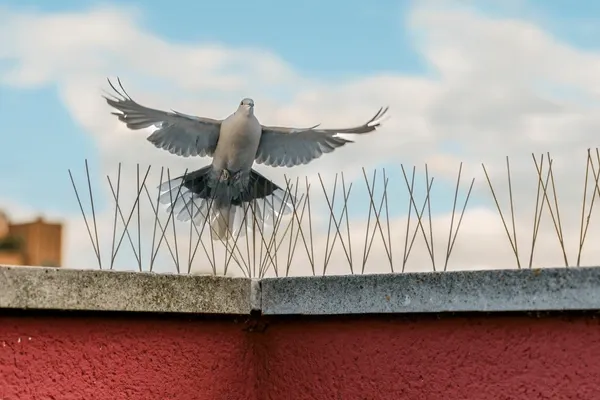
Unlike mammals that can adapt to closed environments, birds are never proprietary to one particular habitat, and can fly at any altitude. They travel, stay and rest in any given space; including urban, closed, and indoor spaces. They can divert a severe health problem (like a plague, and its fetid smell) to a positive sided ecosystem. But a slower one, like a grand, long vacation, by just resting and feeding at will. This duality results in technology to keep birds at bay. Bird spik, duplication, and bird spikes, are the best and newest solutions to this growing problem.
Evolution of Bird Spikes
Traditional bird spikes were primarily designed with a straightforward goal: prevent birds from landing on ledges, rooftops, and other surfaces. Early models consisted of simple plastic or metal strips with pointed prongs. While functional, these spikes were often rigid and aesthetically unappealing, and they could be prone to damage over time. As urban environments became more complex and property owners demanded more versatile solutions, bird spike technology evolved to meet these challenges.
Modern innovations have focused on durability, adaptability, and aesthetics. Advanced materials such as stainless steel and high-strength polymers now make spikes resistant to weather conditions, UV rays, and even vandalism. This ensures that the deterrent remains effective for years without requiring constant maintenance. Additionally, modular designs allow for easy customization, enabling users to cover irregular surfaces, corners, and curved edges seamlessly.
Material Innovations
One of the most important developments in the technology of bird control spikes is the utilization of patented new materials. Stainless steel bird spikes in dubai are now considered standard in most high-risk locations since they are sturdy, do not tarnish, and do not lose their aerodynamic shape during extreme weather. On the contrary, soft, flexible polymer bird spikes are now the standard in residential settings. While these spikes are soft and compliant enough to meet the humane aspects of bird control, they are also firm enough to meet the rigid criteria of bird deterrence.
Using UV-stabilized plastic is also a new materials innovation. Specifically, these plastics are intended to minimize the fading discoloration and structure degradation caused by prolonged exposure to bright sun which is a frequent situation in many areas with a desert climate. As a result, these modern materials allow bird spikes to provide a discreet and aesthetically integrated solution to the enduring problem of bird protection.
Design Enhancements for Maximum Effectiveness
The current designs of bird spikes are concentrating on optimizing design coverage and efficacy. Birds cannot perch anywhere around a bird spike strip, modular spike strips can be linked together to cover larger areas wi--out any gaps. Some configurations include angled spikes that extend outward in more than one direction, making it hard for birds to find a stable place to land. This also discourages birds from repeatedly trying to land on that location.
On top of that, some current bird spikes are mixed with other technologies for deterrence. For instance, spikes can be more effective by combining them with motion triggered components and reflective materials. These combined designs provide more visibility to the spikes, adding a psychological deterrence to the physical barrier.
Aesthetics and Urban Integration
One of the key challenges in bird control has always been integrating deterrent systems without compromising the visual appeal of a building. Innovative bird spike designs have addressed this issue by creating low-profile, transparent, or color-matched options. Transparent spikes, for example, provide an effective barrier without being visually intrusive, making them ideal for high-end commercial properties or historical buildings where aesthetics are paramount.
Customizable designs also allow architects and property managers to maintain the intended appearance of structures. Curved or flexible spikes can follow the contours of decorative ledges, window frames, or signage, ensuring that bird control measures do not detract from the building’s design.
Eco-Friendly and Humane Solutions
Recent advancements in bird spike technology have also focused on maximizing environmental and humanitarian concerns. Other deterrent strategies can injure birds, but spikes are designed to prevent birds from landing without injuring them. The focus on the humane nature of the control also matches the values and regulations of the industry, allowing control in areas with protected birds. Furthermore, the use of durable materials reduces the environmental impact because worn-out spikes do not have to be replaced as often.
Conclusion
Innovations in bird spike technology have transformed a once-simple deterrent into a sophisticated, multifunctional solution. From advanced materials and modular designs to aesthetic integration and humane approaches, modern bird spikes offer an effective, long-lasting, and visually unobtrusive method of controlling bird activity. As urban spaces continue to expand and bird populations adapt to human environments, these innovative designs will remain essential for maintaining clean, safe, and appealing buildings. Property owners can now rely on bird spikes that not only protect their spaces but also harmonize with the modern architectural landscape.